
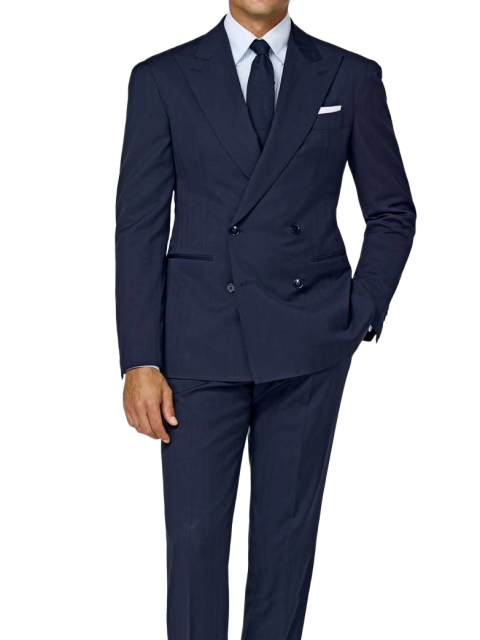


Style guide · Atelier Mesure, Paris 7th
Cufflinks - Complete Guide
The refined finishing touch at the cuff. Cufflinks complete formal elegance and add a note of personal refinement.
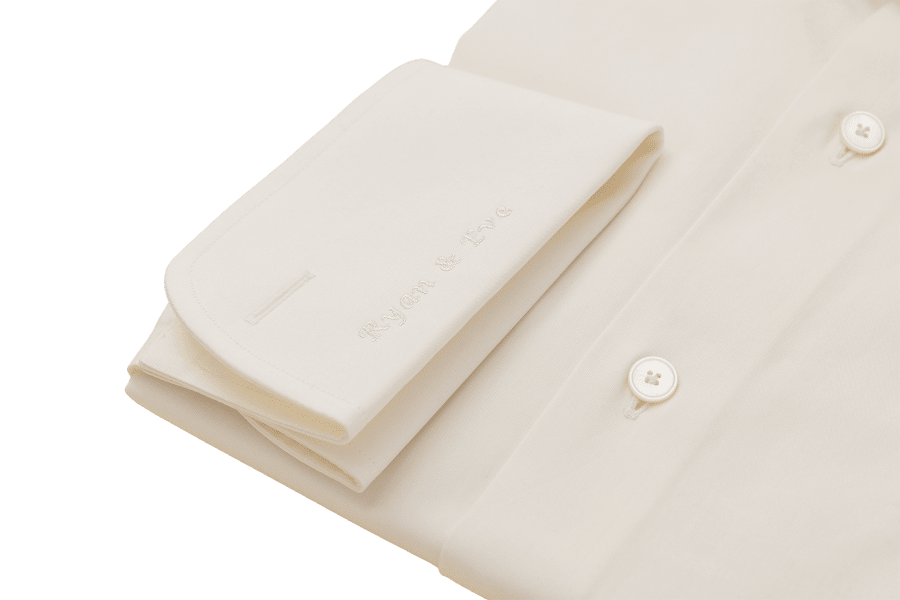
Cufflinks: A Detail of Distinction
Cufflinks are worn with French-cuff shirts. COMPULSORY with a tuxedo, they are optional but elegant with a formal suit. Cufflinks are one of the few pieces of men's jewellery accepted with a suit. Unlike the tie, which draws the eye, cufflinks are a discreet detail visible up close. They speak of attention to detail and a mastery of codes. A connoisseur immediately notices quality cufflinks.
- Cufflinks are compulsory with a tuxedo - a bib-front shirt requires French cuffs
- Discover our complete suit accessories
- For suitable shirts: French-cuff shirts
Chain-Link Cufflinks
Classic Elegant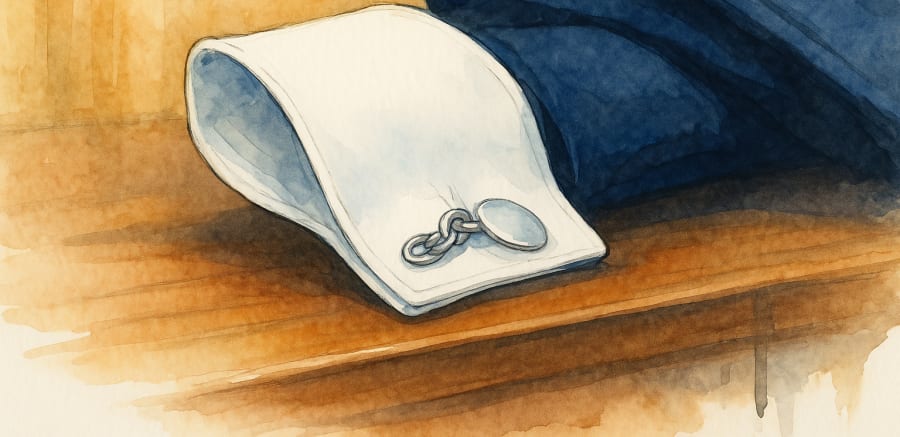
Chain-link cufflinks are the most traditional and elegant. Two decorative faces connected by a flexible chain (typically 2-3cm). The chain passes through the buttonholes and hangs naturally.
- ADVANTAGES
- Maximum flexibility, easy to put on, elegant and discreet, allow natural wrist movement. The most comfortable to wear.
- STYLE
- Timeless classic, never dated. Ideal for formal occasions and daily wear.
- MATERIALS
- Sterling silver (.925), 18k gold (yellow, white, rose), platinum (very high end).
- SHAPES
- Round (the most classic), oval (elegant), rectangular (modern), barrel (baroque).
- BUDGET
- EUR 150-800 depending on metal and craftsmanship.
Toggle Cufflinks
Modern Solid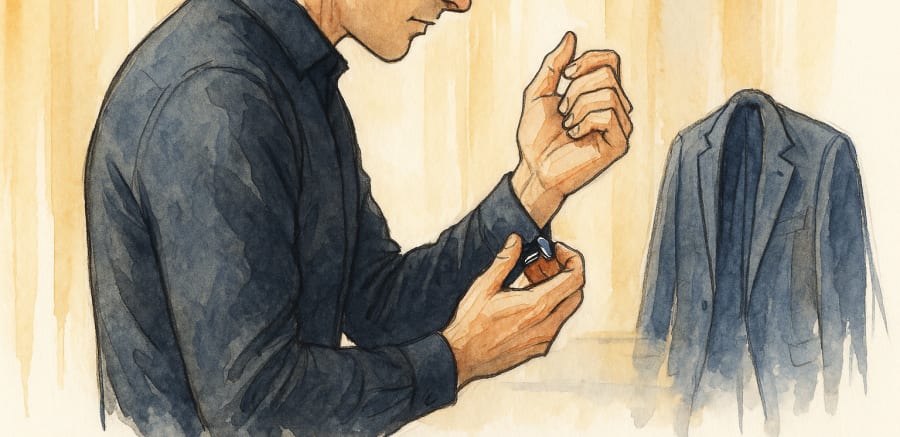
Toggle cufflinks (also known as whale back) have a rigid closure that pivots. A decorative face on one side, a locking bar on the other. The bar passes through the buttonhole and pivots 90 degrees to lock.
- ADVANTAGES
- Very secure fastening, no risk of coming undone, a modern and masculine look, easy once you are accustomed.
- DRAWBACKS
- Less flexible than chain-link, slightly bulkier.
- STYLE
- Contemporary modern, American style. Ideal for business and smart casual. Less formal than chain-link.
- MATERIALS
- Same metals as chain-link (silver, gold, steel). Often in stainless steel for a sport-chic version.
- BUDGET
- EUR 120-500. A steel version at EUR 120-200 is an excellent starting point.
- USE
- Excellent for daily business, less appropriate for a very formal tuxedo.
Silk Knot Cufflinks
Smart Casual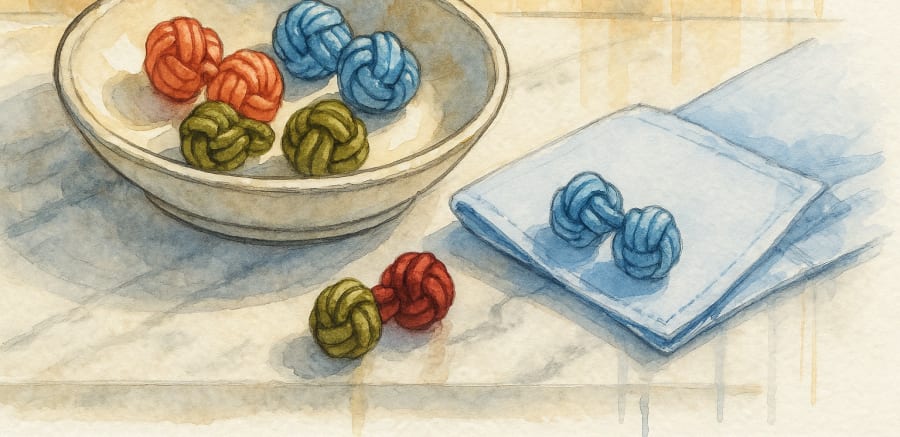
Silk knot cufflinks are made of braided silk cord tied into a cylindrical knot. Two cylinders connected by an elastic link.
- CHARACTERISTICS
- Lightweight, flexible, colourful. The cylinders pass through the buttonholes and the elastic holds.
- ADVANTAGES
- Very comfortable, add subtle colour, accessible price (EUR 30-80), ideal for starting out with French cuffs.
- STYLE
- Smart casual, relaxed elegance. NOT for very formal occasions. Excellent for the relaxed office, elegant weekends, creative contexts.
- COLOURS
- Navy (universal), burgundy (refined), black (understated), multicolour (casual). Coordinate with the tie by colour.
- USE
- A stylish and affordable alternative to metal cufflinks. Ideal for casual shirts with French cuffs. DO NOT wear with a tuxedo - too relaxed.
Snap Closure Cufflinks
Practical Daily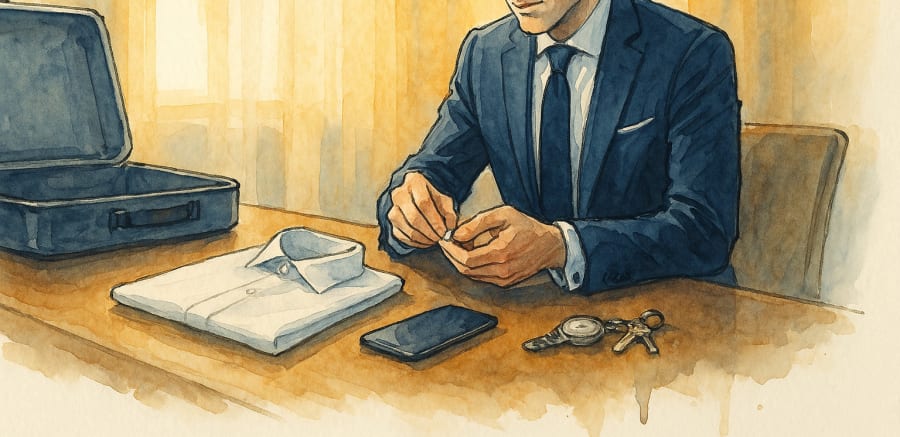
Snap closure cufflinks have a press-stud mechanism that clips shut. A decorative face plus a face with a mechanical press stud.
- ADVANTAGES
- Very practical for daily use, quick and secure fastening, reasonable price.
- DRAWBACKS
- Considered less elegant by purists, visible mechanism is less refined.
- USE
- For daily business use where practicality comes first, frequent travel (quick to put on), contexts where you change shirt often. Acceptable but not ideal for major occasions.
- BUDGET
- EUR 80-250. A good balance of quality, price and practicality.
- ADVICE
- Keep snap cufflinks for daily wear AND chain-link for formal occasions. Do not sacrifice formal elegance for everyday practicality - own both.
Metals, Shapes and Styles
Complete Guide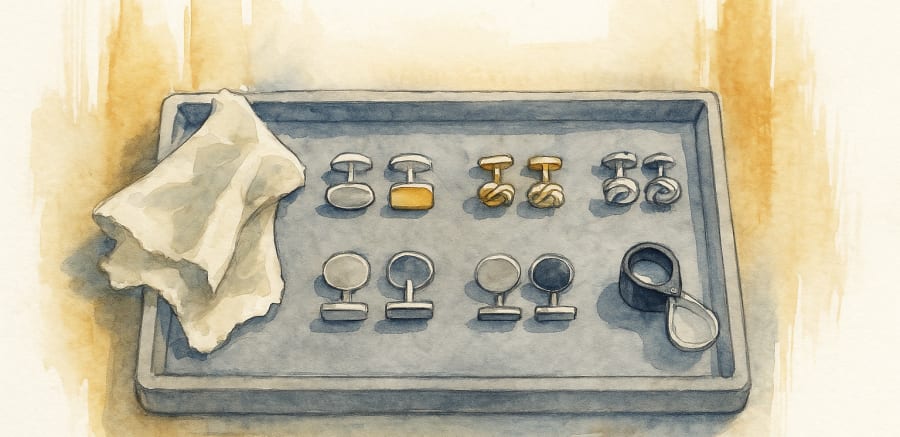
METALS:
- Sterling silver (.925)
- - The universal metal. Goes with everything. Develops a distinguished patina over time. Reasonably priced. FIRST PURCHASE.
- 18k yellow gold
- - Warm and traditional. Ideal with warm skin tones. More formal than silver. Higher budget (EUR 400-1,200).
- White gold/platinum
- - Discreet and modern. A luxurious alternative to silver. Highly refined.
- Stainless steel
- - Modern sport-chic. Durable, corrosion-resistant. Accessible price (EUR 100-200). Less formal. SHAPES:
- Round
- - The most classic and versatile.
- Oval
- - Elegant, visually elongating.
- Rectangular
- - Modern, masculine.
- Square
- - Contemporary, assertive. MOTIFS:
- Plain
- - Maximum elegance and discretion.
- Engraved
- - Initials, geometric patterns.
- Enamelled
- - Subtle colour (blue, black).
- Semi-precious stones
- - Onyx, lapis lazuli. RULE: Restraint always. Avoid ostentatious logos.
Coordination & Wearing Rules
Essential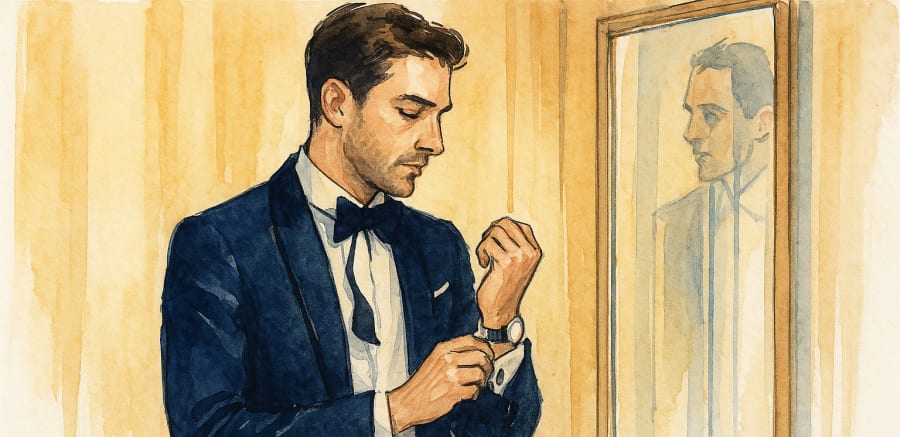
- METAL COORDINATION
- Cufflinks should coordinate with other visible metals: watch, belt buckle, wedding ring.
- RULE
- All silver OR all gold. No mixing silver and gold. Exception: a two-tone watch can bridge silver and gold.
- WITH A TUXEDO
- Silver or white gold cufflinks are compulsory. Understated shape (round or oval, plain). Absolute discretion - no coloured stones, no flashy enamel.
- WITH A FORMAL SUIT
- Silver or gold. Classic shapes. Discreet engravings acceptable (initials).
- WITH BUSINESS CASUAL
- More freedom. Steel, silk knots, modern shapes all acceptable.
- VISIBILITY
- Cufflinks should be visible below the jacket sleeves (1-1.5cm of shirt showing). If invisible, why wear them?
- RESTRAINT
- Cufflinks are noticed up close, not from afar. They should NEVER be the focal point of the outfit. Discretion and refinement.
Cufflinks for Weddings
Special Occasion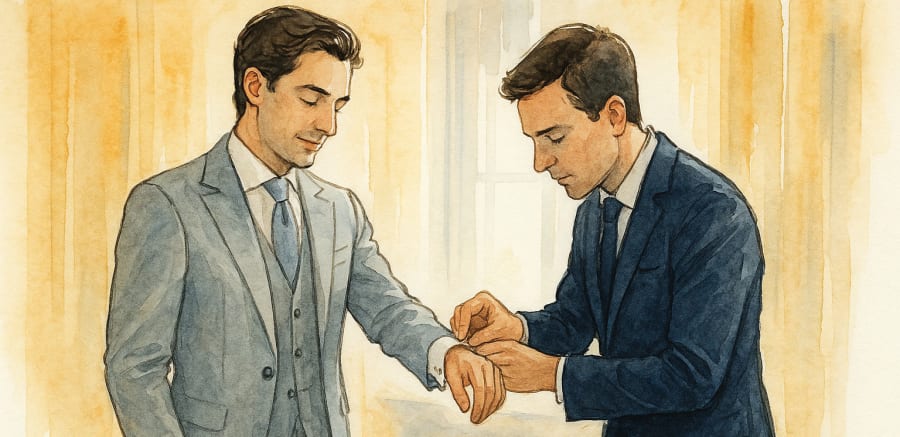
A wedding is the occasion par excellence for wearing exceptional cufflinks. For the groom, they are a personal and symbolic detail that completes the ceremony suit. Cufflinks engraved with the couple's initials or the wedding date make a precious keepsake.
- FOR THE GROOM
- Sterling silver or white gold with a grey or navy suit. Yellow gold with a beige or ivory suit. Classic round or oval shape, discreetly engraved initials.
- FOR THE GROOMSMEN
- Offering matching cufflinks to the groomsmen creates visual cohesion. A budget of EUR 100-200 per pair makes an appreciated and lasting gift.
- WITH A TUXEDO
- Understated silver or mother-of-pearl cufflinks are compulsory. No embellishment with Black Tie attire.
- WEDDING PITFALLS
- Avoid overly showy cufflinks that divert attention. No bright colours or imposing stones. Restraint remains the order of the day, even for a festive occasion.
Care & Preservation
Durability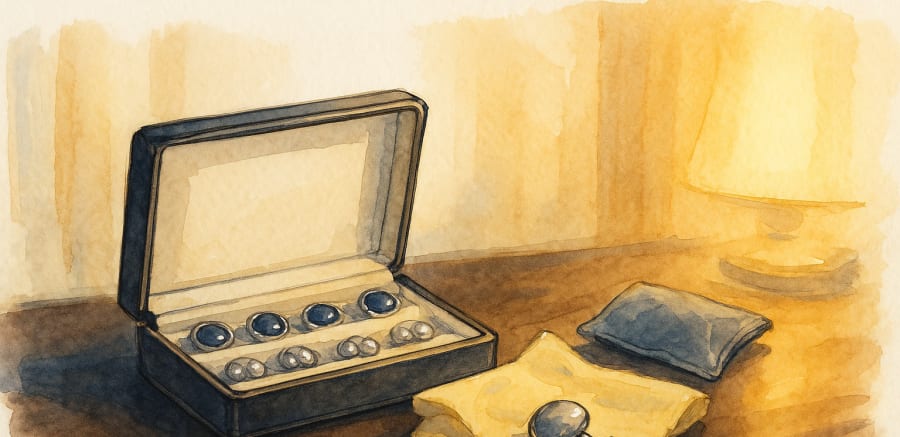
Regular care preserves cufflinks’ lustre and mechanism. Regular maintenance preserves their lustre and mechanism, while suitable storage prevents scratches and oxidation.
- STERLING SILVER
- Silver tarnishes naturally on contact with air (oxidation). Polish with a soft silver cloth every 2-3 months. Store in an anti-tarnish pouch or felt-lined box. Avoid contact with perfume, chlorine and chemicals.
- GOLD
- Gold does not tarnish but does scratch. Clean with warm soapy water and a soft brush. Dry immediately with a microfibre cloth.
- STEEL
- The easiest to care for. A damp cloth is sufficient. Dry to avoid water marks.
- MECHANISM
- Regularly check that toggles and chains operate without forcing. Lubricate the mechanism with a drop of watchmaker's oil if there is resistance.
- STORAGE
- A dedicated compartmentalised box, ideally velvet-lined. Never pile pairs together to avoid cross-scratching.
Key takeaways
Golden Rules of Cufflinks
- Metal coordination: cufflinks + watch + belt buckle in the same metal (silver OR gold)
- With a tuxedo: understated silver is compulsory - round or oval, plain
- Visibility: 1-1.5cm of shirt should show below the jacket sleeves
- Restraint always - cufflinks should be noticed up close, never from a distance
- A wise investment: 1 pair of classic silver chain-link = maximum versatility
Frequently asked questions
Before you begin.
From rules to practice · Paris 7th
Further reading
