



Style guide · Atelier Mesure, Paris 7th
Made-to-Measure Suit Care - Complete Guide
Protect your investment for the long term. Cleaning, storage, brushing - the secrets to making your suit last 15+ years.
Making Your Made-to-Measure Suit Last
A made-to-measure suit deserves regular care. Brushing, airing, suitable storage and appropriate repairs help preserve its appearance and comfort. This guide compiles professional tailoring methods for preserving suits. From daily brushing to annual dry cleaning, master the art of care to maximise the longevity of your investment.
- Prevention > repair: daily habits preserve better than frequent cleaning
- Rotation is compulsory: never wear the same suit on consecutive days
- Goal: preserve the suit through suitable care.
Suit Care: Essential Habits and Reflexes
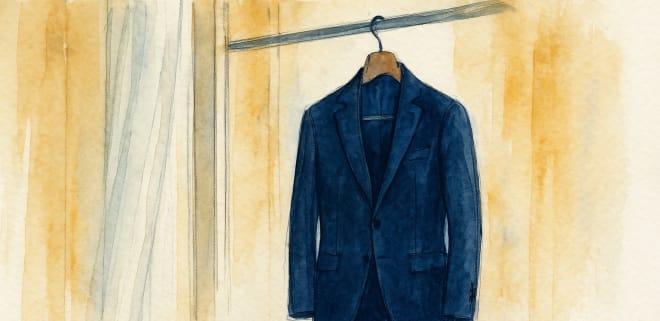
DailyEvery suit deserves daily attention to preserve its drape, line and beauty. After each wear, begin by emptying the pockets completely. Objects - phone, keys, wallet - can distort the fabric and create permanent bulges. Remember: the outer pockets of a jacket are largely decorative. Then hang your suit on a wide wooden hanger that properly supports the shoulders. Avoid metal hangers, which compromise the structure. Place the trousers on the hanger bar or with clamp-style hangers, without a crease at the knee, to preserve the line. Brushing is a simple but essential gesture. With a soft horsehair brush, sweep the fabric in the direction of the fibres to remove dust and particles, paying particular attention to the shoulders and lapels. This ritual significantly reduces the need for dry cleaning. After wearing, air the suit for at least 24 hours in a ventilated space before putting it away. The fabric relaxes, releases moisture and returns to its natural shape. For optimum comfort and extended life, ideally allow 48 hours between successive wears. Regular inspection is indispensable: check buttons, seams and any stains. Acting quickly preserves the suit and prevents lasting damage. Finally, rotate your suits. A minimum of two, ideally three to four for intensive daily use, so that each piece rests sufficiently between wears. This rotation protects the fibre and extends the life of your wardrobe.

Cleaning and Professional Care
EssentialA suit is cleaned rarely. Wool, a living material, naturally regenerates in fresh air. One to two cleans per year suffice for regular use; three to four for daily wear. Beyond that, dry cleaning damages the fibre and shortens its lifespan. The choice of dry cleaner is vital. Forget standard chains: they understand neither the hand nor the memory of a quality fabric. Seek out a dry cleaner who specialises in suits or tailoring, accustomed to fine wools. The higher price reflects the care and precision of the work. Never clean 'as a precaution'. A suit merits professional attention only in cases of visible staining, persistent odour after airing, or before end-of-season storage. When dropping it off, always specify the fabric type and any stains present. Request a gentle clean and refuse excessive steam, which breaks the fibre and alters the drape. Between professional cleans, natural steam is enough to refresh the fabric: hang the suit in a bathroom during a hot shower, let the steam relax the fibres, then air it thoroughly. In case of mishap, a few simple actions can make all the difference: sparkling water on a fresh stain, a soft wipe for a light mark, a little cornflour to absorb a grease spot. At the slightest doubt, entrust the garment to a specialist dry cleaner. Cared for in this way, a suit preserves its line, its lustre and that quiet elegance proper to fine cloth.
Seasonal & Long-Term Storage
Preservation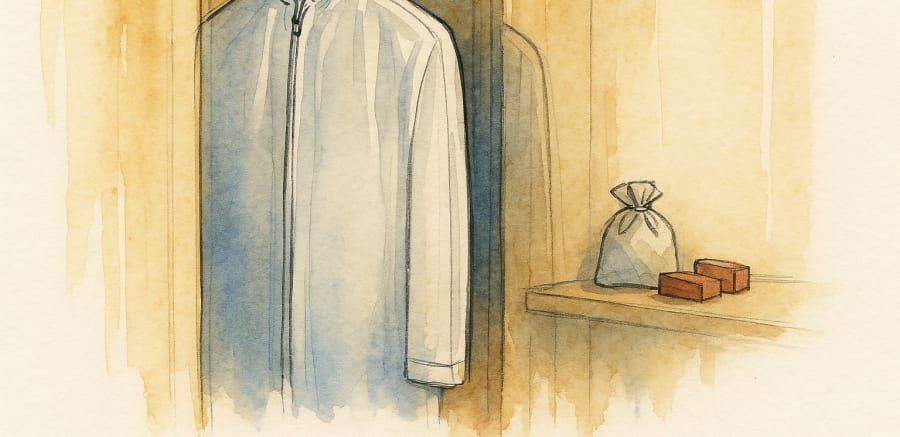
- END OF SEASON
- Professional dry cleaning is compulsory before storage. NEVER store a dirty suit - invisible stains oxidise and set over 6 months. Perspiration attracts moths.
- BREATHABLE GARMENT BAG
- A cotton or linen bag (breathable). NEVER a plastic dry-cleaning cover (traps moisture = mould). The bag should protect from dust while allowing the fabric to breathe.
- MOTH PROTECTION
- Moths love quality wool. Cedar sachets, natural lavender in the wardrobe. Renew every 3-6 months. Avoid chemical mothballs (lingering odour). Regular inspection (moths create small holes).
- STORAGE LOCATION
- A dry, cool, dark wardrobe. Avoid a damp cellar (mould) or a hot loft (fading). A stable temperature is ideal. The suit should be hung, never folded long-term (permanent creases).
- SUMMER/WINTER SUITS
- A linen suit is stored October-April. A flannel suit is stored May-September. Seasonal rotation preserves suits.
- ANNUAL CHECK
- Take out stored suits once a year to air and inspect. Check for moths, mould, damp odour. Re-air if necessary.
Pressing & De-creasing
Technique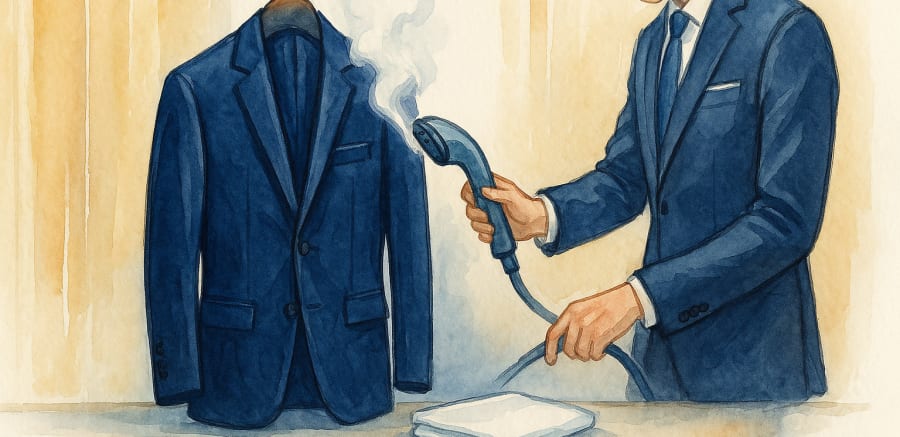
- GOLDEN RULE
- Prefer steam to direct ironing. An iron too hot on wool = permanent sheen (crushed fibres).
- STEAM DE-CREASING
- Hang the suit in the bathroom during a shower. OR use a vertical garment steamer (Philips, Rowenta) - a worthwhile investment. Steam at 10cm from the fabric, never direct contact. Allow to dry completely before storing.
- IRONING IF NECESSARY
- Wool temperature setting only, never higher. ALWAYS use a pressing cloth (damp cloth between iron and fabric) for protection. Iron the reverse side (lining) if possible. Light movements without pressing down. Focus on visible areas (lapels, shoulders).
- TROUSER CREASE
- The trouser crease is restored with an iron and pressing cloth. Align the inner seams to trace the perfect crease. A sharp crease = a sign of polished elegance.
- PROFESSIONAL PRESSING
- For a thorough de-crease before an important event (wedding, key interview). A professional dry cleaner has industrial steam equipment + savoir-faire. EUR 15-20 well spent for important occasions.
- NEVER DO
- Iron directly on wool (sheen). Iron on tuxedo satin lapels (ruins the satin). Excessive steam (soaks the fabric). Iron a damp suit (sets creases).
Minor Repairs & Alterations
Maintenance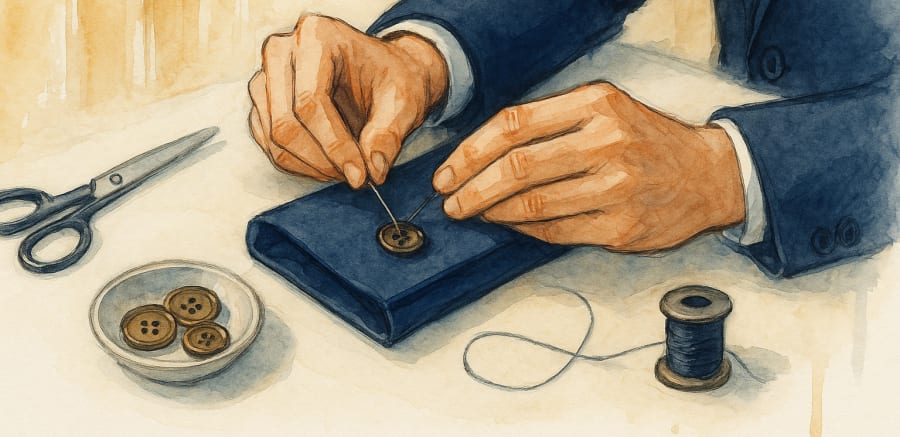
- BUTTONS
- Check button fastenings regularly and keep spare buttons. A loose button can be sewn back on before it is lost.
- LOOSE THREADS
- Avoid pulling on a thread. If a seam opens, have it checked by a professional.
- MINOR SNAGS
- A tailor can assess repair options for a hole or snag according to the fabric and its condition.
- BODY CHANGES
- The feasibility of an alteration depends on the cut, available seam allowances and construction. Ask your tailor for advice.
- NORMAL WEAR
- A frayed hem or damaged lining may be repairable, depending on the garment’s condition.
- WHEN TO REPLACE
- Heavily worn cloth, irreparable tears or significant fading should be examined before deciding on repair or replacement.
Travelling with a Suit
TravelTravelling with a suit calls for a few essential precautions to arrive looking impeccable. Use a rigid garment bag or fold using the inside-out technique: turn the jacket inside out, shoulder into shoulder, and roll the trousers around it. On arrival, hang immediately and let the steam from a hot shower relax the fibres. For frequent travellers, favour crease-resistant fabrics such as fresco or high-twist tropical wool.

Emergencies & Everyday Stains
First AidWhen faced with a stain, speed is decisive. Dab gently with a clean, damp cloth, never rub, as this spreads the stain and damages the fibre. Sparkling water effectively neutralises fresh wine or coffee stains. Cornflour, applied to a grease stain and left for two hours, absorbs the grease before brushing. For more serious incidents, entrust the garment without delay to a specialist dry cleaner, specifying the exact nature of the stain.

Lifespan & Investment
ValueA well-maintained made-to-measure suit represents one of the most worthwhile wardrobe investments. With a rotation of three suits, daily brushing and cleaning limited to twice a year, each piece easily reaches fifteen to twenty years of service. The cost per wear then falls below two euros, well below that of an off-the-peg suit replaced every three years. Consider every act of care as an investment that protects and enhances the value of your wardrobe over time.

Key takeaways
The 10 Golden Rules of Care
- Rotate your suits Each suit deserves at least 48 hours of rest between wears. The fabric recovers its suppleness, the natural drape reasserts itself and the silhouette stays impeccable.
- Brush with care A soft horsehair brush caresses the fabric, removing dust and particles. This simple daily gesture preserves the freshness of the wool and halves the need for dry cleaning.
- Empty the pockets Phone, keys, wallet: these small items irreversibly distort the fabric. A jacket's pockets are discreet and decorative; their contents should be left out.
- Hang correctly A wide wooden hanger supports the shoulders naturally, respecting the suit's line. Metal hangers, by contrast, compromise the cut and alter the drape.
- Clean sparingly Dry cleaning is an exceptional measure: once or twice a year is enough for regular use. Each cycle stresses the fibres and diminishes the wool's lustre.
- Entrust it to specialists Only the expert hands of a specialist dry cleaner understand the finesse of a made-to-measure suit. Standard chains lack the delicacy and can compromise the cloth.
- Air the suit After each wear, let it breathe for 24-48 hours. The fabric absorbs moisture, relaxes and recovers its natural beauty, ready to return to impeccable form.
- Protect from moths Wool attracts moths. A few sachets of cedar or natural lavender are enough to safeguard your garments, while regular inspection prevents surprises.
- Store carefully Before seasonal storage, ensure the suit is clean, dry and hung in a breathable garment bag. This way it rests without constraint and retains its structure and softness.
- Act immediately A loose button, a small snag, a seam starting to come undone: repairing at the first sign of weakness preserves the garment's beauty and extends its life. Every detail counts in lasting elegance.
Frequently asked questions
Before you begin.
From rules to practice · Paris 7th
Further reading
