


Style guide · Atelier Mesure, Paris 7th
How to Wear a Suit - Complete Guide
The golden rules for wearing a suit with elegance. Coordinations, mistakes to avoid, and the secrets of the best-dressed men.

The Art of Wearing a Suit
Owning a perfect made-to-measure suit is not enough - you must also know how to wear it. Between buttoning rules, shirt-tie coordinations, shoe-suit pairings and mistakes to avoid, masculine elegance follows precise codes handed down over a century. This guide compiles the universal rules for wearing a suit with elegance. From fundamentals (which button to fasten?) to subtleties (coordinating accessory metals), master the art of the suit.
- Immutable rules: certain rules are not up for debate (the bottom button always undone)
- Flexible principles: others adapt to context and personal style
- A well-worn suit communicates mastery of the codes and confidence
The Universal Buttoning Rule
Fundamental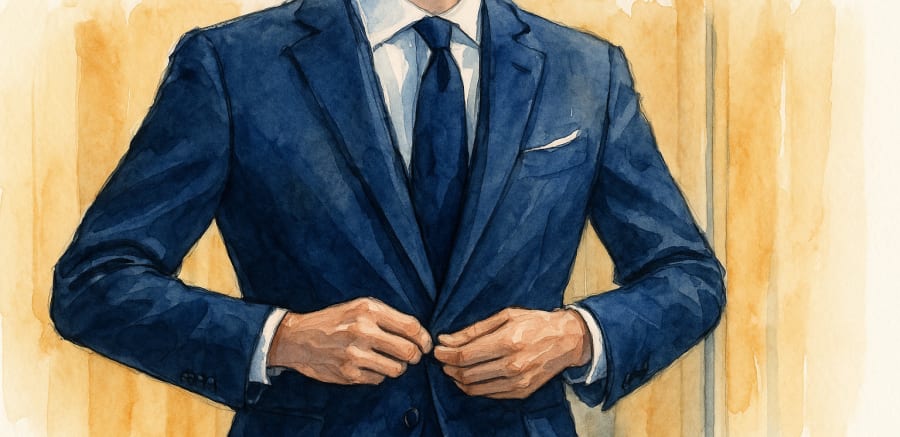
- 1-BUTTON JACKET
- Always buttoned when standing. Unbuttoned when seated. (Rare - tuxedos, some double-breasted styles).
- 2-BUTTON JACKET
- Fasten the TOP button only. The bottom is always undone. Unbutton when seated. The most common style.
- 3-BUTTON JACKET
- 'Sometimes, Always, Never' rule. Top button = optional (sometimes). Middle button = always. Bottom button = never. OR fasten only the middle. Unbutton when seated.
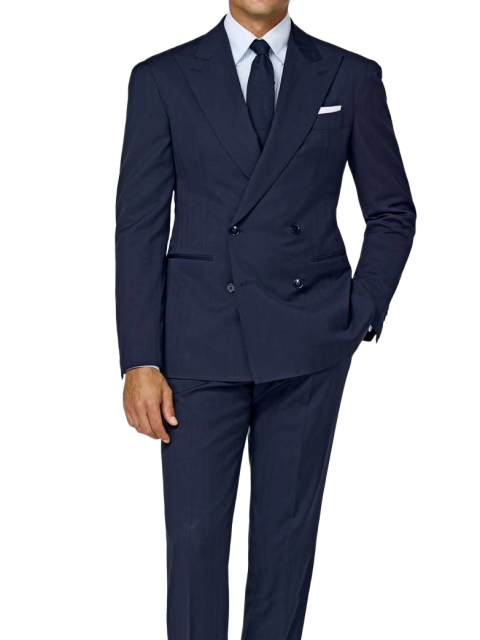
- DOUBLE-BREASTED JACKET
- All buttons closed at all times, EVEN WHEN SEATED. The double-breasted suit loses its structure if unbuttoned. Exception: very relaxed settings.
- WAISTCOAT
- The bottom button of the waistcoat is ALWAYS undone. This tradition dates back to Edward VII (too corpulent to fasten the bottom). The custom has been maintained ever since.
- WHY UNBUTTON WHEN SEATED
- A buttoned jacket pulls and creates unsightly creases when you sit. Unbuttoning preserves the jacket's shape and your comfort. Re-button when you stand.
- FATAL ERROR
- Buttoning all buttons = a beginner's mistake that betrays ignorance of the codes. Connoisseurs spot it immediately.
Foolproof Colour Coordinations
Harmonies
- GENERAL RULE
- A maximum of 3 colours across the complete outfit (suit + shirt + tie + pocket square + shoes). Beyond that = visual overload.
- NAVY SUIT
- White shirt (classic), pale blue (modern), pale pink (creative). Burgundy, grey, dark navy or gold tie. Black shoes (formal) or dark brown (casual). White pocket square (understated) or burgundy (festive).
- GREY SUIT
- White shirt (standard), pink, pale blue. Pink, burgundy, navy or lilac tie. Brown shoes (cognac, chocolate) recommended. Pocket square coordinated by colour with the tie.
- BROWN/BEIGE SUIT
- White or sky blue shirt. Navy, olive green, burgundy or dark brown tie. Brown shoes COMPULSORY (tan, cognac). NEVER black with a warm-toned suit. Natural linen or coordinated pocket square.
- CONTRAST RULE
- The tie should be darker than the shirt, lighter than the suit. This creates a harmonious top-to-bottom gradation.
- MONOCHROME
- Suit, shirt and tie in the same colour family (navy + sky blue + dark navy) = sophisticated elegance. Requires mastery of tonal nuance.
Coordinating Shirt & Tie
Essential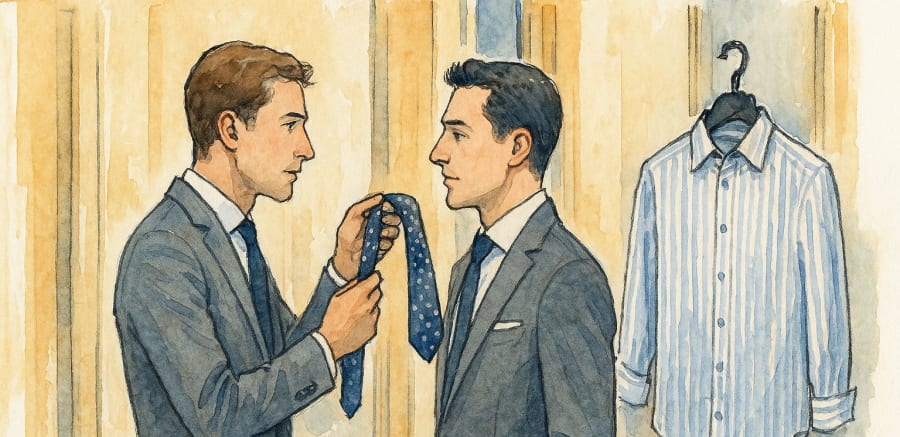
- PLAIN SHIRT + PATTERNED TIE
- White or plain shirt with a patterned tie (stripes, dots, prints). A safe, elegant combination. The most common.
- STRIPED SHIRT + PLAIN TIE
- Fine-striped shirt with a solid tie. Visual balance. Ideally the tie picks up one of the stripe colours.
- AVOID
- Striped shirt + striped tie = pattern clash. Checked shirt + geometric-patterned tie = overload.
- PROPORTIONATE KNOT
- Tie knot width proportionate to the shirt collar width. Wide collar = wide Windsor knot. Narrow collar = four-in-hand.
- TIE LENGTH
- The tip of the tie touches the belt buckle. Neither higher (looks odd) nor lower (looks careless). The narrow blade must never extend beyond the wide blade.
- POCKET SQUARE NEVER MATCHED
- The pocket square is COORDINATED by colour with the tie but NEVER in the same fabric/pattern. Matched = an 1980s faux pas. Coordinated = elegance.
- WITHOUT A TIE
- An open collar is acceptable in smart casual. Unfasten 1 or 2 buttons (never 3+). Avoid an undershirt showing. Remove the pocket square if no tie is worn (creates an imbalance).
Shoes, Belt & Socks
Foundation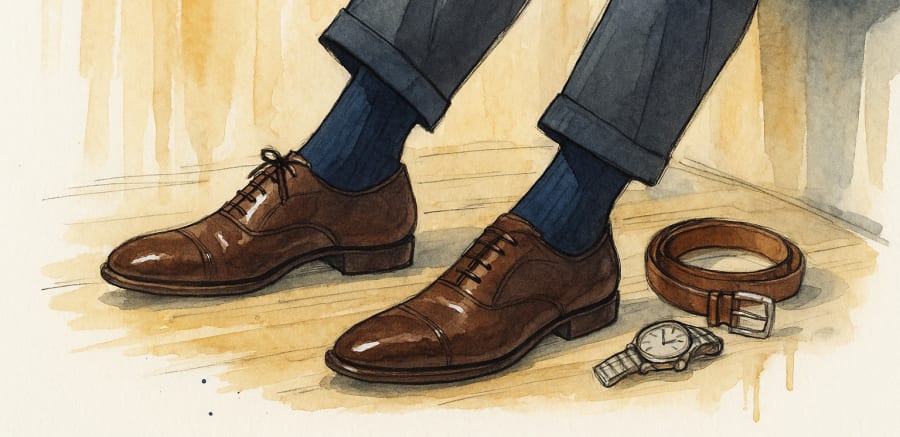
- METAL RULE
- Belt buckle + shoe buckles + watch + cufflinks in the same metal (silver OR gold, no mixing).
- LEATHER PAIRING
- Belt and shoes in the same leather colour. Black shoes = black belt. Brown shoes = brown belt. Exception: two-tone shoes.
- SHOES BY SUIT
- Black/charcoal suit = black shoes. Dark navy = black or dark brown. Medium grey/blue = cognac brown. Beige/brown = light brown.
- SOCKS
- ALWAYS calf-length minimum. NEVER short socks that expose the calf when seated. Sock colour = tone-on-tone with trousers OR shoes. Or a discreet tie-coordinated accent.
- PATTERNED SOCKS
- Acceptable in creative settings. Discreet patterns. Avoid loud colours in strict corporate contexts. Socks are a subtle touch of personality.
- BRACES
- Braces OR belt, NEVER both at the same time. Braces = traditional elegance. If the jacket is removed, braces should be understated.
Accessories & Details That Count
Refinement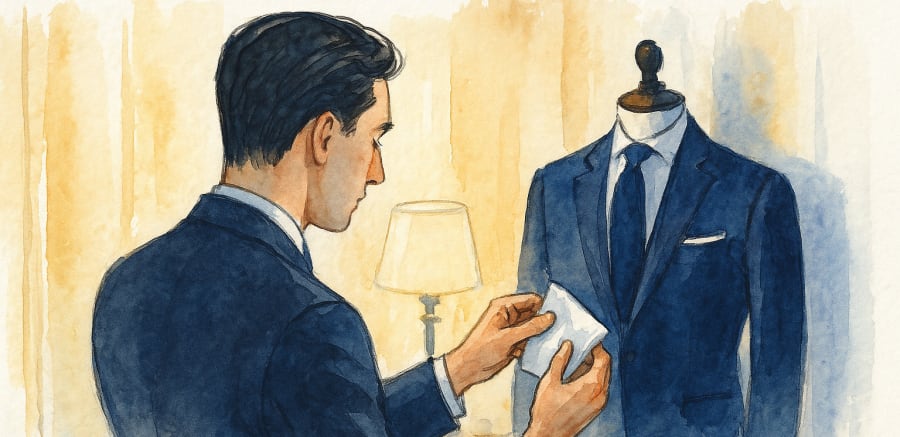
- POCKET SQUARE COMPULSORY
- For any formal or semi-formal outfit, a pocket square is NOT optional. An empty pocket = an unfinished outfit. White linen pocket square = the safe universal choice.
- WATCH
- A single watch, on the left wrist (for right-handers). Watch style consistent with the suit's formality. Tuxedo = understated dress watch. Business casual = sport watch acceptable. Avoid coloured plastic watches with a suit.
- MEN'S JEWELLERY
- A wedding ring is acceptable. A signet ring is optional (right hand, little finger). Avoid: multiple bracelets, visible necklaces, earrings in corporate settings. Restraint always.
- BELT VS BRACES
- Never both. Braces are more elegant, a belt more practical. With a tuxedo = braces are compulsory.
- OVERCOAT COORDINATION
- An overcoat in the same tone or darker than the suit. Charcoal or navy pairs easily with many suits. Buttoned outdoors, removed indoors.
- BAG/BRIEFCASE
- Quality leather, understated. Colour coordinated with shoes. Avoid backpacks with a formal suit (strict corporate). A classic leather briefcase or leather messenger bag.
- VISUAL DETAILS
- 1-1.5cm of shirt showing below the jacket sleeves. Pocket square showing 1-2cm from the pocket. Tie touching the belt. These details create visible elegance.
The 15 Fatal Mistakes to Avoid
Pitfalls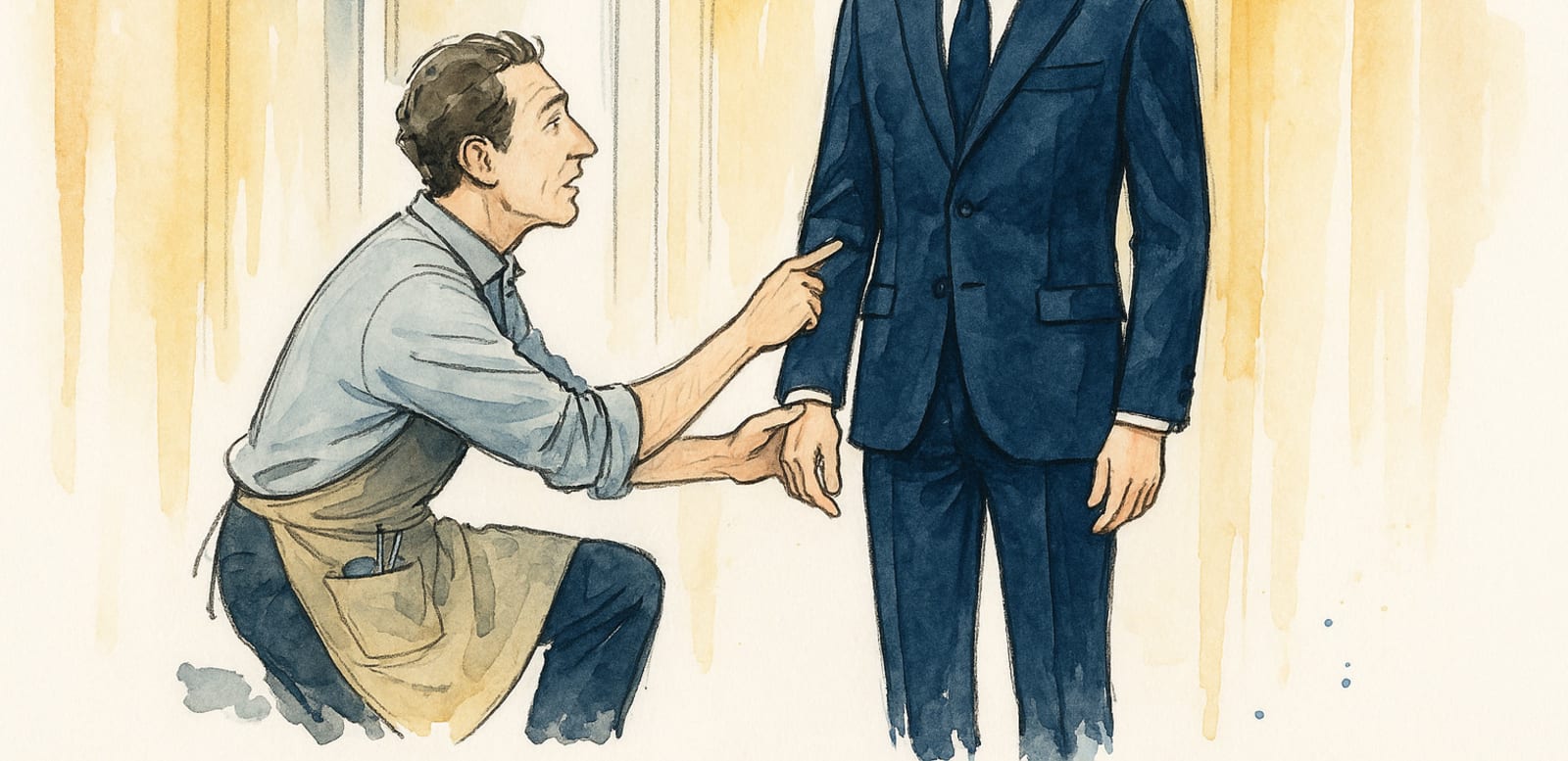
- Buttoning all buttonsBetrays a total ignorance of the codes.
- Short socksShowing calves when seated = careless.
- Tie too short/longShould touch the belt exactly.
- Pocket square matching the tieSame fabric = a dated 1980s faux pas.
- Brown shoes with a black suitAn inadmissible warm/cool clash.
- Jacket too long/shortShould cover the seat, no more.
- Excessive trouser breakA maximum of 1-2cm break on the shoe.
- Wearing a tie without a pocket squareAn imbalance (formal above, empty pocket below).
- Undershirt visible with an open collarWear a V-neck undershirt that stays hidden.
- Mixing metalsSilver AND gold together = inconsistent.
- Jacket sleeves too longNo shirt showing = sleeve too long.
- Braces AND beltNever both - choose one.
- Creased/dirty suitAn impression of carelessness negates any quality.
- Jacket too tightButtons pulling, X-shaped creases in the back = too small.
- Wearing a tuxedo during the dayTuxedo = after 6pm only. These mistakes mark you as a beginner. Connoisseurs notice ALL of them.
Dress Codes Decoded
Social Codes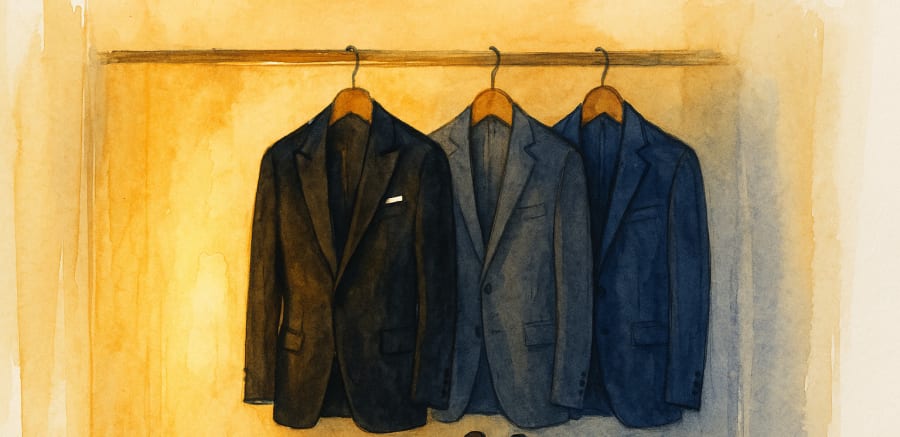
Dress codes are a source of confusion because their terms vary across countries and eras. Here is a guide to the main dress codes to ensure you never get it wrong.
- BLACK TIE
- Black or midnight blue tuxedo, compulsory. White bib-front shirt, black silk bow tie, black patent Oxfords. No tie, no standard suit. A cummerbund or waistcoat is optional.
- CREATIVE BLACK TIE
- Classic tuxedo but with freedom for the bow tie (velvet, patterned) and a coloured pocket square.
- WHITE TIE
- Tailcoat, white pique waistcoat, white bow tie, stiff-fronted shirt. The most formal, reserved for state galas.
- BUSINESS FORMAL
- Dark suit (navy, charcoal), white or pale blue shirt, restrained tie, Oxfords. For interviews, presentations, important meetings.
- BUSINESS CASUAL
- Suit or blazer with chinos. Open collar acceptable. No tie required. Well-kept shoes but more freedom (loafers, Derbies).
- SMART CASUAL
- No full suit required. Blazer, V-neck jumper, chinos, loafers or premium trainers. Relaxed but polished elegance.
Season & Occasion: Adapting Your Suit to the Context
Adaptability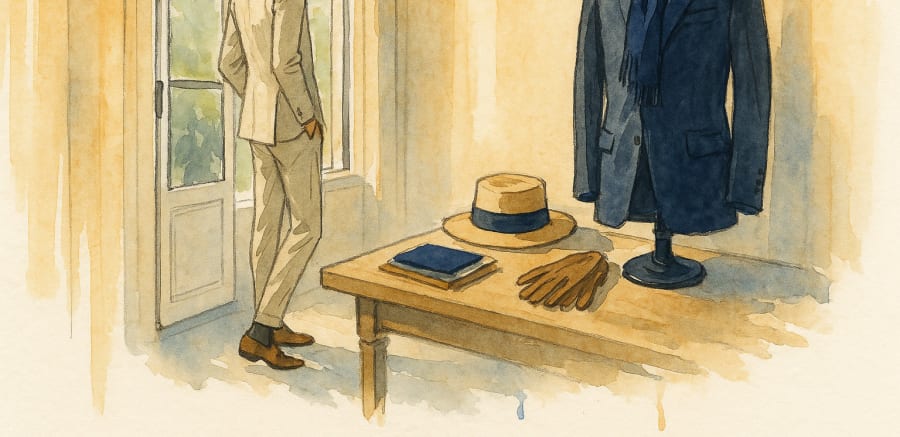
The same suit does not suit every season or every occasion. Adapting the choice of fabric, colour and style to the context demonstrates a complete mastery of dress codes.
- SUMMER
- Lightweight, breathable fabrics - linen, cotton, tropical wool fresco. Lighter colours acceptable (beige, light grey, sky blue). Unstructured construction for lightness. Loafers without socks in very casual contexts only.
- WINTER
- Flannel, tweed, heavier wool. Dark, rich colours (navy, charcoal, burgundy). A waistcoat added for warmth and style. Chelsea boots or chukka boots acceptable.
- MID-SEASON
- Medium-weight wool, crepe. Maximum versatility. Spring-autumn suits form the core of the wardrobe.
- WEDDING
- Light suit in summer (light grey, blue), dark in winter. Avoid black unless it is an evening ceremony. Pocket square and boutonniere are customary.
- FUNERAL
- Black or dark charcoal suit, white shirt, black tie. Absolute restraint. No coloured pocket square.
- DAILY OFFICE
- Rotate a minimum of 3-5 suits to avoid wear. Alternate colours and textures across the week.
Key takeaways
The 10 Commandments of Wearing a Suit
- Bottom button: ALWAYS undone (jacket and waistcoat) - an immutable rule
- Unbutton when seated: preserves the jacket shape and avoids creases (except double-breasted)
- Pocket square compulsory: if a tie is worn, a pocket square is non-negotiable
- Consistent metals: watch + cufflinks + buckles in the same metal
- Calf-length socks: never any skin visible between trouser and shoe
- Tie touches the belt: perfect length is compulsory
- Shirt shows 1-1.5cm: below the jacket sleeves - a crucial detail
- Shoes = belt: same leather colour, compulsory
- Maximum 3 colours: across the complete outfit for harmony
- Impeccable suit: clean, pressed, crease-free - otherwise everything is undone
Frequently asked questions
Before you begin.
From rules to practice · Paris 7th
Further reading
