


Style guide · Atelier Mesure, Paris 7th
Made-to-Measure Trousers
Perfectly fitted trousers transform your comfort and silhouette. From the choice of cut to the finishes, every detail matters.
Introduction
Made-to-measure trousers adapt to your unique build: high or low rise, developed or slim thighs, leg length. Unlike ready-to-wear, which offers 3-4 standardised cuts, made-to-measure creates a pattern specific to your body. Pair your trousers with a matching or contrasting made-to-measure jacket. For a complete ensemble, discover our business suit or our two-piece suit. The casual modular suit also allows you to wear the trousers separately. The comfort of well-fitted trousers radically transforms your daily experience.
The Rise: Comfort and Style
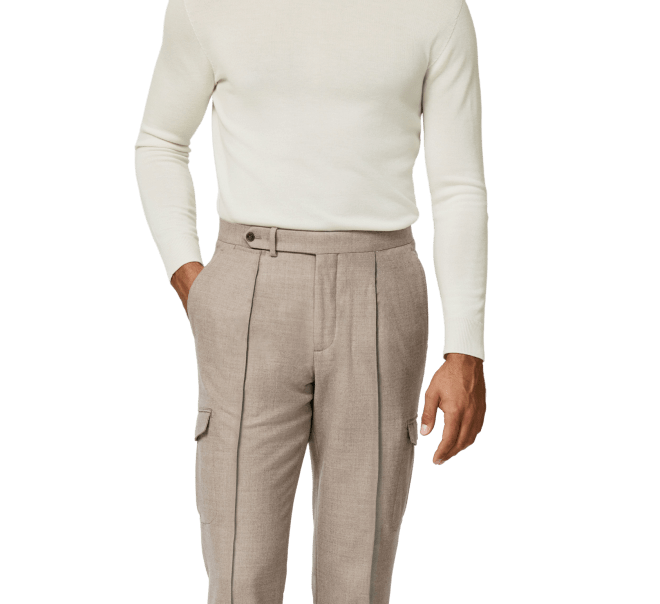
The rise height is the most important factor for comfort. Standard rise (classic): the trousers sit at navel level. This is the traditional height offering the best comfort when seated - the trousers do not compress the abdomen and do not slip. Recommended for builds with a prominent stomach. Mid-low rise: 3-4cm below the navel. A modern compromise between comfort and contemporary style. Works for most builds. Low rise: 5-7cm below the navel. Modern style but can be uncomfortable when seated or with a stomach. Reserved for slim builds. The difference between your waist and hip measurements determines where the trousers naturally want to sit. Made-to-measure trousers respect your actual build.
Pleats: Shape and Elegance
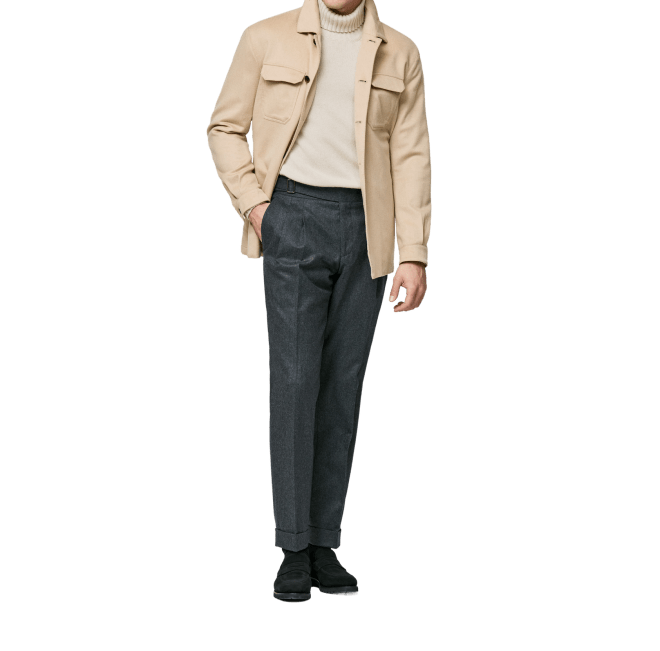
Pleats are the fabric folds at the waistband that create fullness at the hips and thighs. No pleats (flat front): a clean, modern, streamlined silhouette. Works well for slim, younger builds. Less comfortable when seated. Single pleat: a compromise between modernity and comfort. Slight fullness, comfortable without appearing bulky. Double pleats: the timeless classic. Excellent comfort, elegant drape, particularly recommended for standard rise and builds with developed thighs or a stomach. Pleats can be turned inwards (standard) or outwards (continental style, slightly more formal). More fabric does not mean 'looking larger' - well-executed pleats create a fluid drape that slims the silhouette.

The Cut: From Thigh to Ankle
The trouser line determines your silhouette. Straight cut: constant width from thigh to ankle. A timeless classic style, works for all builds, particularly flattering with developed calves. Slightly tapered: the most modern and flattering. Gradually narrows by 1-2cm from thigh to ankle. Visually lengthens the legs, a contemporary silhouette without being extreme. Tapered (slim): marked narrowing, a very fitted line. For slim, younger builds. Beware of excess - trousers too tight at the calf prevent the natural drape of the fabric. Wide cut: rarely recommended today except for a very particular style. The cut must be proportionate to the jacket: a fitted jacket with very wide trousers creates an imbalance.
The Length: The Perfect Break
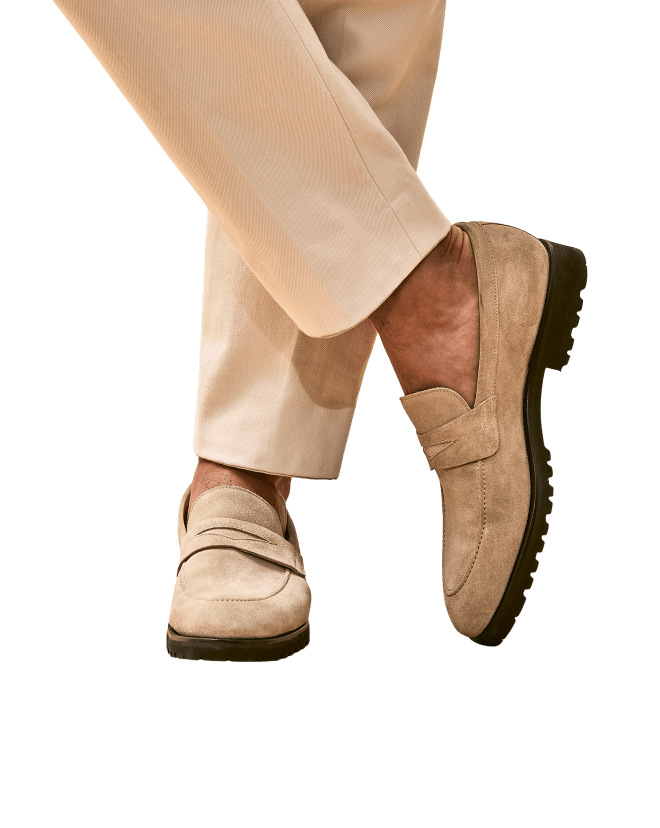
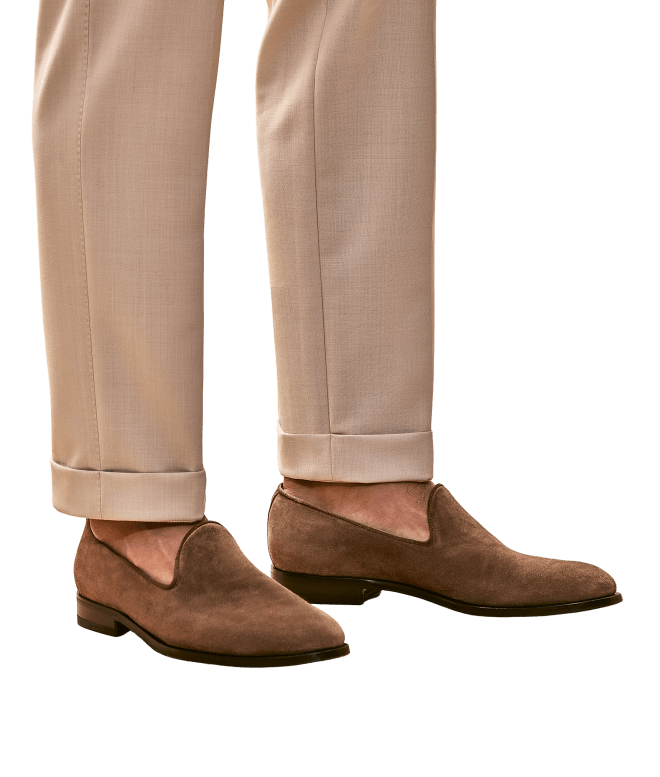
The length determines how the trousers 'break' on the shoe. No break: the trousers barely touch the shoe. A modern, clean look, particularly with low shoes. May appear too short for purists. Half break: the fabric creates a slight fold on the top of the shoe. The contemporary standard, a balance between modernity and classicism. Suits everyone. Full break: the fabric creates a complete fold. A more classic style that slightly ages the look but conceals less-than-perfect shoes. The appropriate break also depends on the cut: slim trousers need little or no break; straight cut can accommodate a full break. Our team considers your usual shoes to determine the optimal length.
Belt or Braces: Style and Support
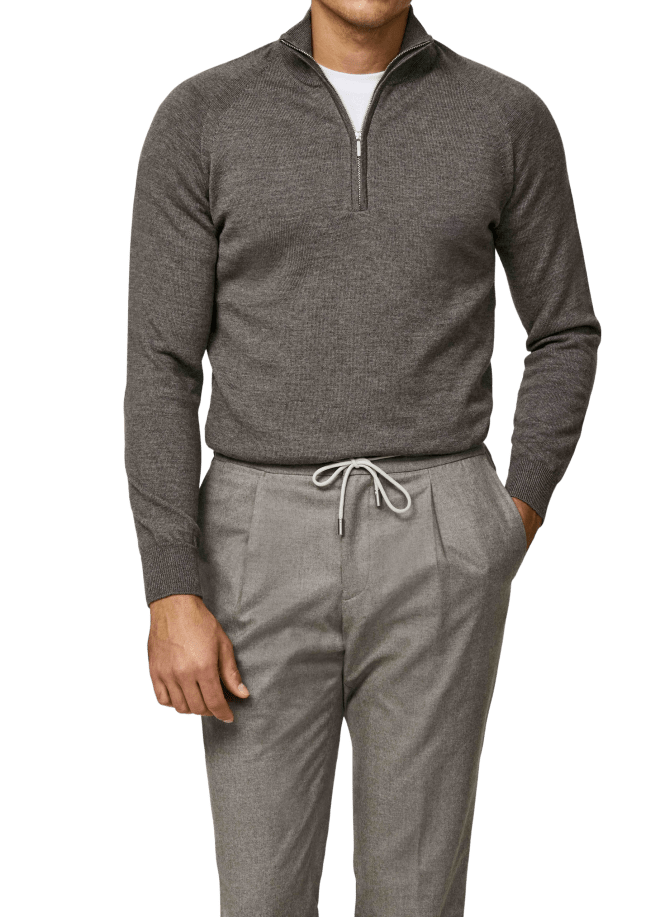
Trouser support is a question of style and comfort. Belt loops: the modern standard. The belt width should be proportionate to the loops (3-3.5cm generally). Colour coordinated with shoes. Advantage: adjustable. Disadvantage: can create a bulge if too tight. Braces buttons: a classic style, particularly with high rise and pleats. Braces hold the trousers without compressing the waist. Very comfortable, particularly during extended periods of sitting. A more formal and traditional style. Braces are traditionally worn UNDER the jacket (thus invisible). Never wear braces AND a belt simultaneously - choose one. Some made-to-measure trousers include both options for maximum versatility.
Pockets: Discreet Functionality
Pockets are essential but must remain discreet. Side pockets: slanted (standard, easy access) or vertical (more formal, Italian style). Must be deep enough for a phone and keys without creating visible bulk. Reinforced for durability. Back pockets: one or two depending on style. Back pockets with a button add a formal detail. Some clients prefer no back pockets for a cleaner line. Watch pocket (small pocket on the right): an optional traditional detail, rarely functional today but aesthetically pleasing. Pocket lining: in a durable fabric (cotton twill) that outlasts the main fabric. Made-to-measure trousers adapt the position and depth of pockets to your actual use and build (avoiding pockets that gape).
The Hem: Finish and Drape
The hem finish affects the final drape. Single hem: folded once, lighter, suited to lightweight summer fabrics. Double hem: folded twice, more weight, better drape. Standard for most trousers. The additional weight helps the trousers hang straight. Hem with binding: a fabric tape added to the inside to protect the hem from wear. Recommended if you walk a great deal - the hem wears from friction against the shoe. Allows the hem to be redone several times over the life of the trousers. Turn-ups (cuffs): folded outward, visible. A more relaxed and vintage style. Adds weight at the bottom, improving drape. Generally 3.5-4.5cm in height. Better suited to pleated trousers with a straight cut. Not recommended for shorter builds (visually shortens).
Details and Finishes
The details that distinguish exceptional trousers. Fly: concealed zip (modern, practical) or traditional button fly (more difficult). Gold or silver zip to match the jacket buttons. Belt loops: 5 or 7 depending on preference. Sewn with reinforcement to prevent tearing. Width proportionate to the belt. Side braid: a strip of contrasting fabric (often satin) on the sides. Traditionally reserved for tuxedo trousers and evening wear. Adds formal elegance but makes the trousers less versatile. Reinforcement points: at stress points (crotch, pockets) for maximum durability. Double main seams for strength. Pocket lining in a tear-proof fabric. These reinforcements contribute to the garment’s strength.
From rules to practice · Paris 7th
Further reading
