


Style icons11 September 20263 min read
The Duke of Windsor: inventor of the modern wardrobe.
Prince of Wales checks, the Windsor knot, softness as a creed: one man fixed a good part of today's suiting codes on his own. What in that 1930s wardrobe is still worn as is.
By Gilles Masson, Atelier Mesure, Paris 7ᵉ
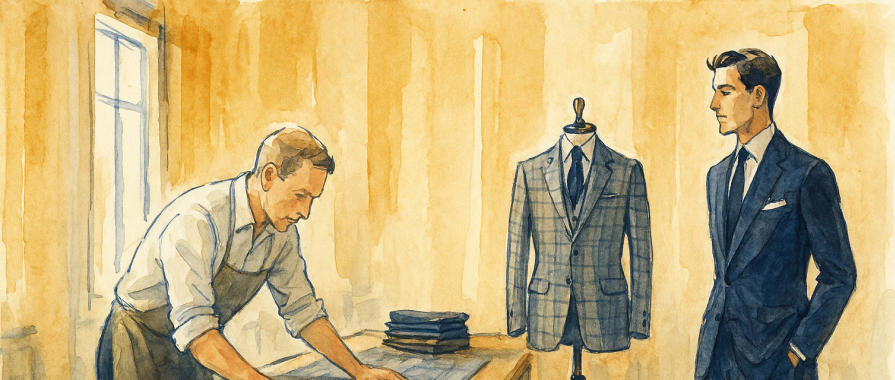
Few men can claim to have durably moved the codes of male dress. Edward, Prince of Wales and later Duke of Windsor, did it several times: a pattern carries his title, a tie knot carries his name, and his conviction that elegance owes nothing to stiffness became the doctrine of all contemporary tailoring.
A pattern turned signature
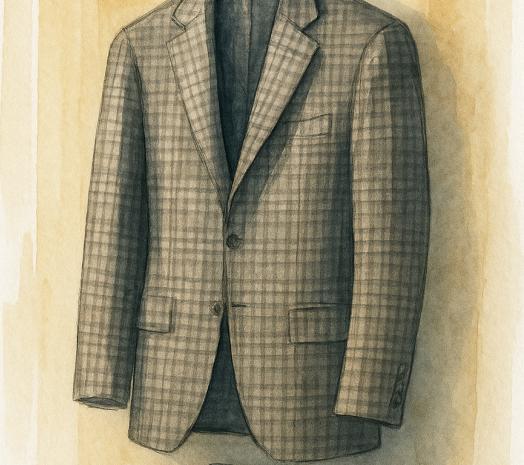
The Prince of Wales was a country pattern, confined to Scottish tweeds and shooting parties. By wearing it in town, constantly and in muted tones, he made it a suiting pattern in its own right; no one has sent it back since.
The method is worth keeping: a sartorial audacity settles in when it rests on classical foundations, an orthodox cut, calm tones. The pattern makes the departure; everything else reassures. The tweed suit obeys exactly that logic today.
The knot that bears his name
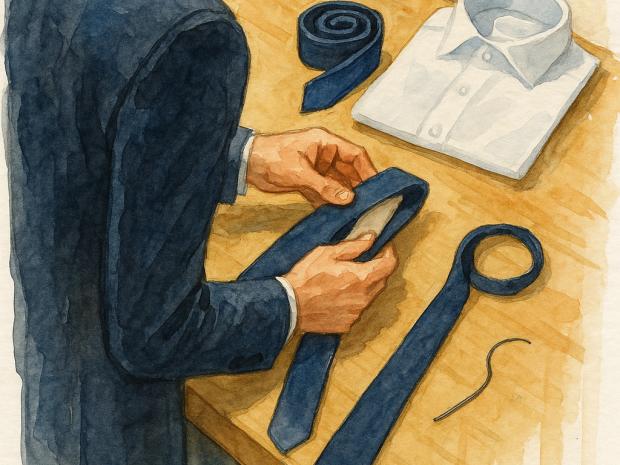
The story of the Windsor knot contains its own best lesson: the Duke did not use that knot. The volume everyone envied came from the cloth of his ties, cut in thick, heavily interlined silks and tied in the simplest possible way.
The volume of a knot is therefore decided when the tie is designed, through cloth and interlining, not by sleight of hand. And the collar is drawn afterwards: a shirt with a spread collar receives a full knot, a closed collar calls for a discreet one.
Softness as doctrine
His loathing of stiffness was a position of principle: lightly built jackets, natural shoulders, cloths that drape, ease claimed even in the most formal dress. The soft tailoring that 2026 consecrates descends in a straight line from that doctrine.
The decisive nuance has not changed: ease is not the absence of structure. A soft jacket holds through its canvas, worked to follow the body instead of constraining it; without it, softness is only slump.
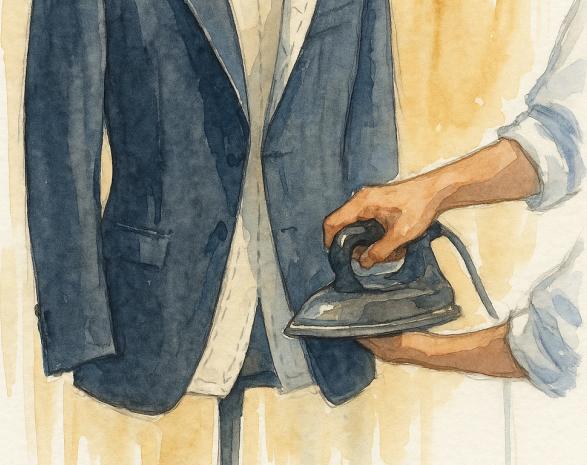
« The Duke of Windsor had style in every buckle on his kilt. »
Key points
What Windsor fixed for good.
- The Prince of Wales has been worn in town since he put it there
- An audacity settles on classical foundations and muted tones
- The volume of the knot comes from the cloth, not the technique
- The collar spreads in proportion to the knot it receives
- Softness is a doctrine, not a comfort
- A soft jacket holds through its canvas, never without it
- Codes last when they serve ease
Almost a century later, soft tailoring, patterns in town and open collars descend in a straight line from that wardrobe. Drawing on it requires no fancy dress: a well-chosen pattern, calm tones and a soft construction, in other words the business of a made-to-measure suit.
