


Style icons22 November 20255 min read
The Harvey Specter suit: power dressing in Suits.
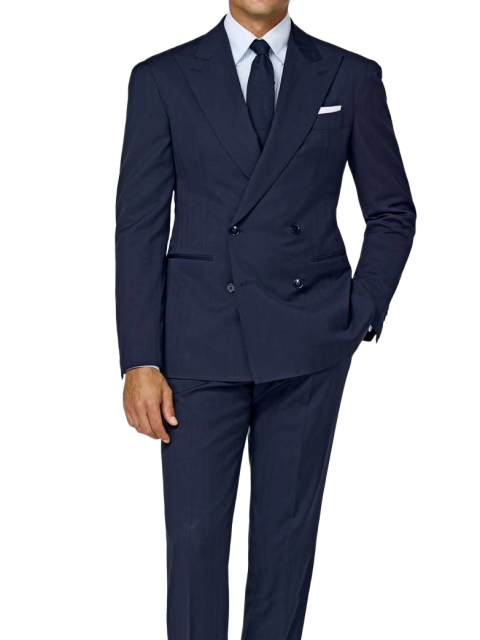
Charcoal, navy, black: Harvey Specter's wardrobe comes down to three colours and one cut. The power dressing of Suits, and what survives of it in Paris.
By Gilles Masson, Atelier Mesure, Paris 7ᵉ

"I don't wear a suit. The suit wears me." Harvey Specter is the archetype of modern power dressing in Suits. His close-cut Tom Ford suits, immaculate shirts and slim ties redefined corporate elegance through the 2010s. Here is what that style is actually made of, and how much of it is worth keeping.
The codes of Suits power dressing
Harvey Specter's style rests on a single principle: nothing is left approximate. Every detail is decided.
The rule of three darks
Harvey wears almost exclusively three suit colours:
1. Charcoal The most frequent. Neither black nor mid grey. The shade projects authority without the severity of black. Across Suits, about sixty per cent of Harvey's suits are charcoal.

2. Deep navy A very dark blue, close to black indoors. Quieter than charcoal and just as effective. The choice for the negotiations that matter.

3. Black Kept for trials and major confrontations. Harvey uses black as a psychological instrument, not as an everyday colour.

The signature Tom Ford cut
Through the early seasons of Suits, every one of Harvey's suits is Tom Ford. That cut is what fixes his visual identity.

Jacket
- Slim Italian cut, suppressed at the waist, no cloth left floating
- Structured but fine shoulders, integrated construction rather than heavy padding
- Two-button front, buttoned close to the sternum, which lengthens the silhouette
- Short length, ending mid-seat, decidedly modern
- Slim notch lapel of seven to eight centimetres, elegant without display
- Side vents, two at the back, easier to move in
Trouser
- Very slim cut, close to the body without clinging
- Mid-high rise, sitting at the natural hip
- Flat front, cleaner and more current
- Minimal break, a single clean break or none at all
- Narrow ankle, eighteen to nineteen centimetres of opening at most
The result: a clean V silhouette. Wide shoulders, marked waist, an unbroken vertical line. The suit becomes a kind of armour.
The details that make Harvey
Full silk lining Harvey never compromises here: silk throughout. No viscose, no polyester. Silk slides, breathes, and shows.

Working cuff buttons The four sleeve buttons genuinely open, what tailors call surgeon cuffs. A discreet detail, and a reliable sign of real made-to-measure. It also lets the sleeve be turned back.

Ticket pocket, optional A small extra pocket above the right hip pocket. A British detail Harvey wears occasionally. More decorative than useful today.

Pickstitching Visible hand stitching along the lapel edge. A mark of careful making. Harvey wears it tone on tone, discreetly, or contrasting when the point is to be seen.

Shirts and ties: the art of pairing
Harvey's shirts
The base: impeccable white Ninety per cent of the time, Harvey wears white. Not ecru, not ivory: pure white. Italian or cutaway collar, and French cuffs without exception.
Shirt cloths
- 100s poplin, fine grain, matt finish
- Royal oxford twill, light texture, a shade more relaxed
- Satin, subtle sheen, distinctly formal
The alternatives
- Sky blue, to soften a charcoal suit
- Dusty pink, rarely, but always well judged
- Never a pattern, no stripes or checks: Harvey stays plain

Harvey's ties
Proportions:
Seven to seven and a half centimetres wide, current, and in proportion with his slim lapels
Exact length, the tip meeting the belt buckle
Windsor or half Windsor knot, full, symmetrical, deliberate
Colours and patterns: Harvey favours:
Burgundy and garnet, his signature, authority with restraint
Navy, dependable and undated
Silver and pearl grey, for charcoal suits
Black, kept for dinner jackets or dramatic moments
Acceptable patterns:
Plain, eighty per cent of the time
Discreet geometric micro-patterns
Fine diagonal stripes
Never a novelty tie
Materials:
Woven silk throughout
Matt or lightly satin finish
Medium weight, so the knot holds

Adapting Harvey Specter to Paris
The Suits style is thoroughly American, Wall Street in particular. To bring it into a Parisian setting:
What to keep:
The close, fitted cut
Premium cloths
The rigour in the details
The dark colours
What to adjust:
Slightly more natural shoulders, since the American construction is more rigid
Slightly wider lapels, eight to eight and a half centimetres rather than seven, closer to European taste
A marginally less slim trouser, for comfort as much as for line
Accept brown, elegant in Europe and close to taboo on Wall Street

When to wear it:
Important client meetings
Commercial negotiations
Fundraising and investor pitches
Senior business dinners
Premium corporate events
When not to:
Casual startup settings, where you will be overdressed
Informal after-work gatherings
Weekends, even smart casual ones
Creative fields, which run on different codes
The Harvey suit works in finance, consulting, law and traditional corporate settings. Elsewhere it can read as stiff.
More than a suit, a frame of mind
The Harvey Specter suit is not only a matter of cloth and cut. It rests on a few convictions:
Excellence is not negotiable, no detail is secondary
Dressing well is a form of self-respect
Appearance affects how you are read and treated
Holding the standard takes daily discipline
Wearing Harvey means accepting that appearance counts. In competitive settings, it does.
The atelier is there to build your own version of that armour. Not to look like Harvey Specter, but to look unmistakably like yourself.
