


Style13 March 20263 min read
The suit at work: three ways to wear it in 2026.
The suit is back in offices, but never again on its own with a tie. Three registers that work today, and what really separates them.
By Gilles Masson, Atelier Mesure, Paris 7ᵉ

For a few years the suit was declared finished at work. It came back, but transformed: it no longer signals a function, it signals an intention. That shift changes how you assemble it far more than it changes the cut itself.
The formal register, owned
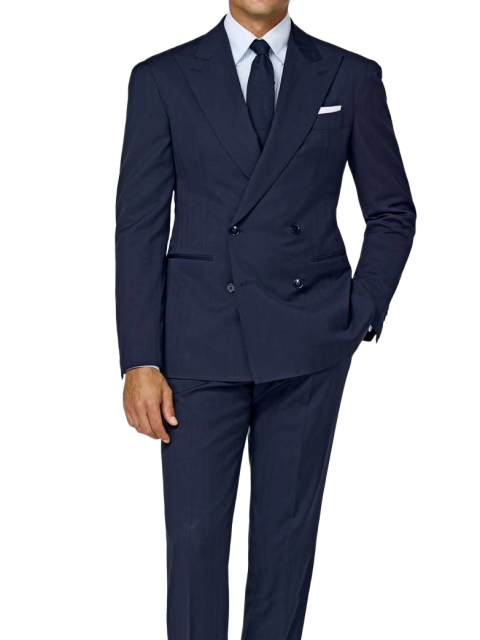
Dark suit, pale shirt, tie. It is the most legible register and it has not disappeared: it remains the dress of meetings where you represent something larger than yourself, a house, a case, a signature.
What has changed is that it is no longer the default. Worn every day it wears thin and becomes ordinary; kept for the moments that count, it recovers its effect. A navy and a charcoal are enough to cover the year.

The open collar, which asks more of the cut
The same suit, no tie, collar open. It is now the majority register and the hardest: without a tie, nothing hides the line of the collar, the spread of the first button, the way the lapel sits on the chest.
A collar that is too soft collapses and reads as undone; one that is too tall reads as a polo neck. The made-to-measure shirt earns its place here, because the collar is one of the few pieces in a wardrobe where two centimetres are visible from three metres away.

The odd jacket, the most forgiving register
Jacket alone, different trouser. This is the register that allows texture and pattern: a tweed, a textured woollen, a discreet check, things a full suit would make too loud.
The rule fits in one sentence: the more textured the jacket, the smoother the trouser must be, and the reverse. A made-to-measure jacket designed from the outset to be worn alone is cut a little differently from a suit jacket: slightly shorter, sometimes patch pockets, an even softer shoulder.

« Elegance is knowing how far you can go too far. »
Key points
Three registers, seven markers.
- Keep suit and tie for the meetings that deserve it
- Without a tie everything rests on the collar: choose it structured, not soft
- Two well-cut dark suits cover a working year
- An odd jacket carries texture; a full suit carries less
- The more textured the jacket, the smoother the trouser
- Shoes set the register as much as the jacket does
- One departure per outfit: colour, texture or pattern, never all three
The office suit does not call for more pieces than before, it calls for pieces that combine. That is what made-to-measure changes: you no longer assemble from what exists, you decide what is missing. See the markers for wearing a suit.
