


Style guide · Atelier Mesure, Paris 7th
Men's Suit Shoes - Complete Guide
The foundation of masculine elegance. Shoes make or break an outfit. A guide to Oxfords, Derbies, loafers and their care.

Shoes: The Foundation of Every Outfit
Poor quality shoes ruin the finest suit. Conversely, excellent shoes elevate an average suit. Shoes are the first thing connoisseurs look at - they instantly reveal your level of mastery of masculine elegance. To accompany your business suit, wedding suit or tuxedo, invest in quality shoes with Goodyear welt construction, genuine leather and leather soles.
- Shoes play a decisive role in the appearance of a formal outfit.
- Poorly maintained shoes are worse than inexpensive shoes that are well polished
- Discover also our suit accessories to perfect your elegance
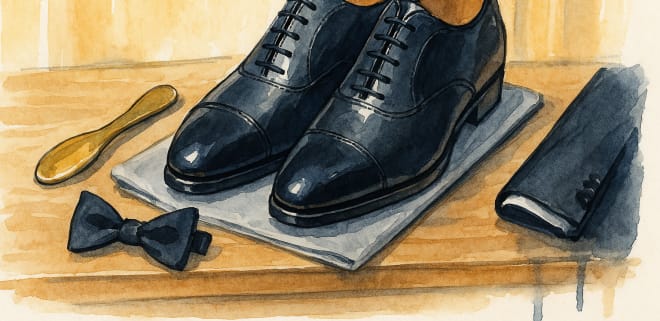
Oxford
Maximum FormalOxfords are THE quintessential formal shoes. Key feature: closed lacing (quarters sewn under the vamp). This creates a clean, elegant line. Black Oxfords are COMPULSORY with a tuxedo. Plain toe (smooth, unadorned toe) or cap toe (a horizontal seam at the toe) are the most formal. Brogued Oxfords (with light perforations) are acceptable but less formal. RULES: Black Oxfords with dark grey, dark navy or black suits for very formal contexts (interviews, key presentations, formal weddings). Brown Oxfords with beige, brown or medium blue suits for daily business and semi-formal occasions. Minimum construction: Goodyear welt, leather sole, full-grain leather upper. Recommended makers: Crockett & Jones, Church's, John Lobb (prestige), Carmina (excellent value). Budget: EUR 350-800 for lasting quality.
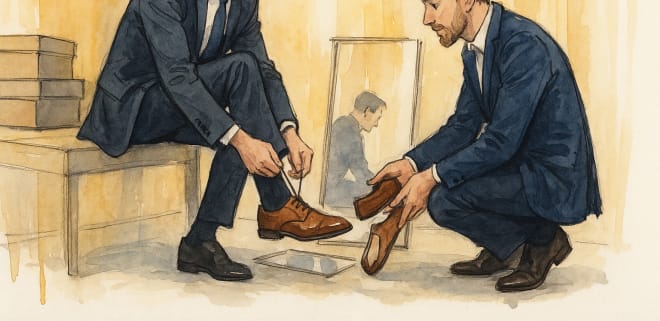
Derby (Blucher)
Versatile FormalDerbies are slightly less formal than Oxfords. Key feature: open lacing (quarters sewn over the vamp). This offers more flexibility and comfort for wider feet or a high instep. Derbies are ideal for daily business suits; less suited to very formal occasions. A plain-toe Derby for maximum versatility. A full-brogue Derby is acceptable in a relaxed business context. USE: Black Derbies for daily business, contexts where Oxfords would be too formal but elegance is still required. Brown Derbies (tan, cognac) are excellent for a casual suit, creative contexts, smart casual. Ideal with a casual suit or tweed suit. Construction: same standards as Oxfords (Goodyear welt, leather sole). Budget: EUR 300-700.
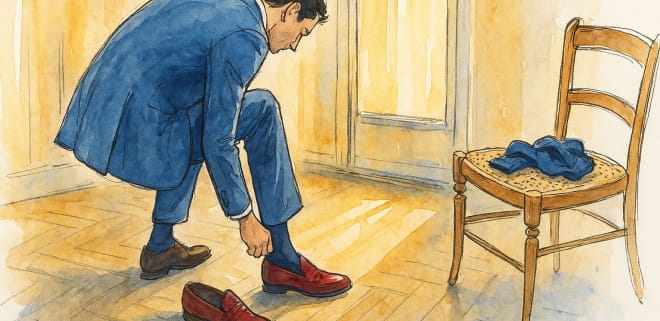
Loafers
Semi-Formal & CasualLoafers are slip-on shoes. Penny loafers (with a strap), tassel loafers (with tassels), horsebit loafers (with a Gucci-style snaffle bit). Formality level: semi-formal at most, never for very formal contexts. NO LOAFERS with a tuxedo or formal wedding suit. USE: Black or burgundy leather loafers with a business suit in summer or a relaxed setting. Brown, grey or blue suede loafers with a casual suit, separate suit trousers, creative contexts. Ideal for smart casual; not admissible in a strict corporate setting. Socks: some wear loafers without socks in summer (Italian style) - acceptable only in very casual or holiday contexts. In the office, calf-length socks are compulsory. Budget: EUR 250-600. Makers: Crockett & Jones, Carmina, Alden (USA).
Monk Strap (Buckle Shoes)
Distinctive Modern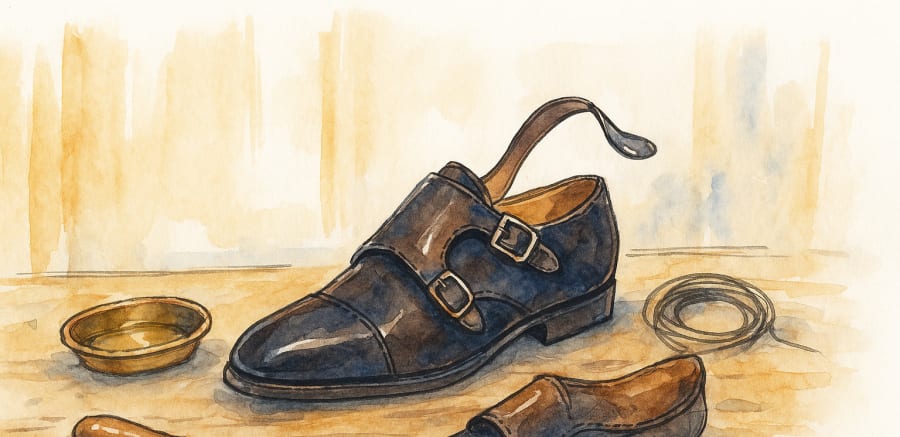
Monk straps are shoes with buckle(s) instead of laces. Single monk (1 buckle) or double monk (2 buckles). A distinctive, modern style, between a Derby and a loafer in formality.
- USE
- Double monks in black or brown leather for modern business, creative contexts where you want to stand out. Less formal than Oxfords/Derbies, more formal than loafers. Ideal for the man who has mastered the codes and wants to assert his personality. Single monks are slightly more formal than double.
- NOTE
- Monk straps require confidence - they are a statement piece. Not suited to very conservative corporate contexts. Excellent for creative industries, start-ups, contexts where individuality is valued. Budget: EUR 300-700. Goodyear welt construction recommended.
Chelsea Boots
Modern Elegant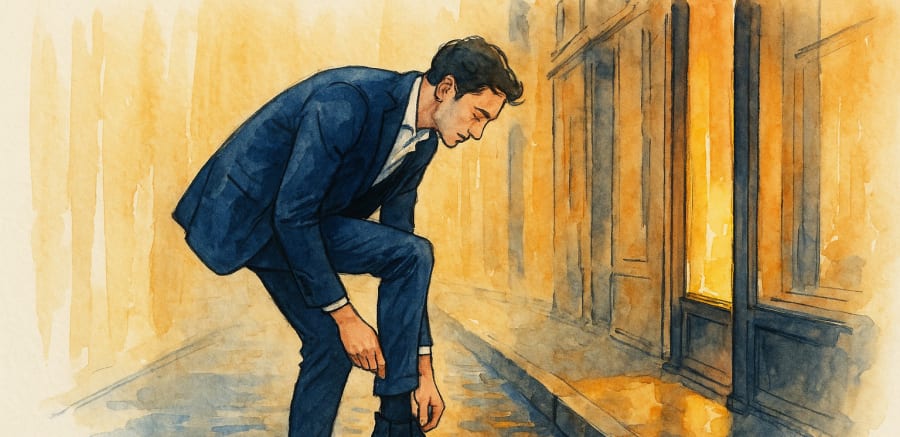
Chelsea boots are ankle boots with elasticated side panels, no laces. Popularised by the Beatles in the 1960s, they are enjoying a resurgence.
- USE
- Black or brown leather Chelsea boots for a casual suit, a modern creative context. Excellent in autumn-winter. More relaxed than low shoes but more elegant than standard boots. Ideal with a casual suit, suit trousers with a jumper, autumn-winter smart casual.
- NOTE
- Suede Chelsea boots are even less formal - reserve for weekends and pure casual. NEVER wear Chelsea boots in very formal settings or with a tuxedo. Construction: quality Chelsea boots with Goodyear welted leather sole. Budget: EUR 250-600. Makers: R.M. Williams (Australia), Crockett & Jones, Loake.
Suit-Shoe Pairing Rules
Essential
- COLOURS
- Black shoes with black, dark charcoal, very dark navy suits. Brown shoes (tan, cognac, burgundy) with medium blue, beige, brown, light grey suits. NEVER brown shoes with a black suit - this is a clear mistake. Burgundy shoes are versatile - they work with grey and blue.
- FORMALITY
- The more formal the occasion, the darker and more understated the shoes should be. Tuxedo = black patent Oxfords, compulsory. Formal wedding = black cap-toe Oxfords. Business = black or brown Oxfords or Derbies. Casual = loafers, monk straps, Chelsea boots.
- CARE
- A full polish once a week if worn daily. Cedar shoe trees SYSTEMATICALLY as soon as you remove your shoes. Rotation: NEVER wear the same shoes two days running - leather needs 24 hours to dry. Soles: professional resoling every 2-3 years for Goodyear welted shoes.
Ankle Boots & Chukka Boots
Autumn-Winter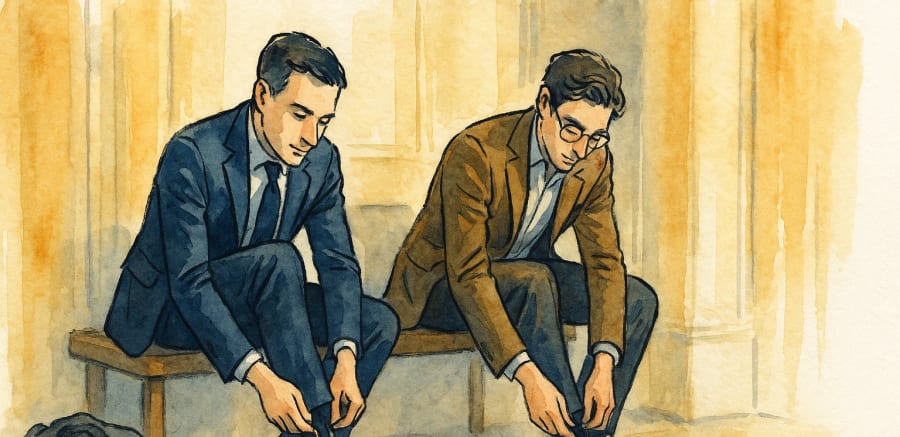
Ankle boots and chukka boots are elegant alternatives to low shoes in colder seasons. The chukka boot, recognisable by its higher shaft and two or three lacing eyelets, offers a perfect balance between structure and informality. In suede for a refined casual style; in smooth leather for a more dressed-up look.
- USE
- Leather chukka boots with a casual autumn-winter suit, ideal with flannel or tweed. Suede chukkas (desert boots) for smart casual only. Lace-up ankle boots for creative and winter contexts.
- NOTE
- More relaxed than Derbies or Oxfords; not suitable for very formal contexts or a tuxedo. Goodyear welt construction recommended for durability. Budget: EUR 250-500 for lasting quality. Recommended makers: Crockett & Jones, Church's, Loake.
- COORDINATION
- Brown chukkas with medium blue, grey or beige suits. Grey suede chukkas with light grey or blue suits.
Care & Patina
Longevity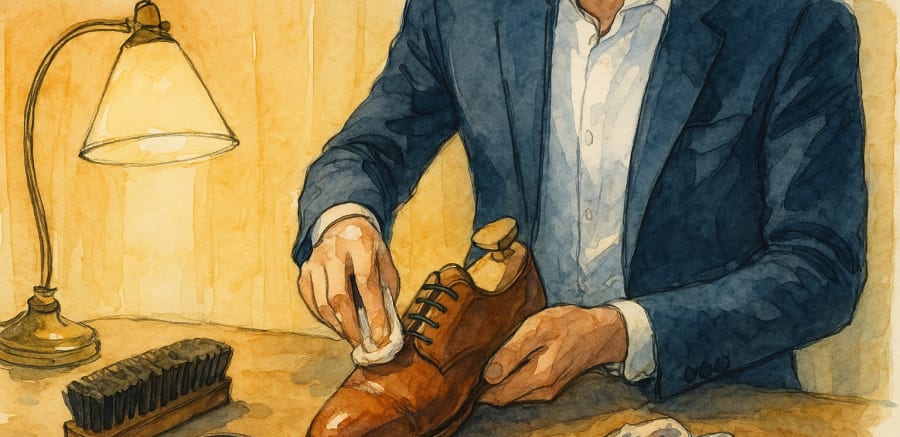
Regular care helps preserve the leather and shape of shoes. The natural patina that develops over time lends the leather a depth and richness impossible to replicate on new shoes.
- WEEKLY ROUTINE
- Dust with a cloth, apply nourishing cream, leave to absorb for 10 minutes, brush vigorously with a horsehair brush, finish with a soft cloth for lustre.
- POLISH
- Tinted polish to revive colour, neutral polish to nourish without altering the shade. Mirror shine (glazing) for special occasions only.
- SHOE TREES
- Cedar wood SYSTEMATICALLY after every wear. Cedar absorbs moisture and odours, preserving the shape.
- RESOLING
- Every 2-3 years for Goodyear welted shoes. Entrust to a specialist cobbler, never a quick-service repair.
- FATAL ERRORS
- Never dry on a radiator (leather cracks), never wear two days in a row (leather needs 24 hours to dry), never store damp without shoe trees.
Key takeaways
Golden Rules of Suit Shoes
- Never brown with black - brown shoes are ONLY worn with beige, brown or medium blue suits
- Shoe trees always - insert shoe trees as soon as you remove your shoes, not 'later'
- Rotation is compulsory - never wear the same shoes two days running, leather needs 24 hours to dry
- Weekly polishing - poorly maintained shoes ruin the finest suit
- Goodyear welt construction - Goodyear welted shoes can be resoled
Frequently asked questions
Before you begin.
From rules to practice · Paris 7th
Further reading
